
Despite near gender parity in basic bank account ownership, women in India remain significantly underrepresented in the growing platform economy due to gaps in digital financial capability and access to credit, according to a joint report by the International Labour Organization and National Council of Applied Economic Research.
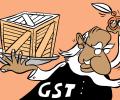
Tax experts clarify that merchants will pay 18% GST on Merchant Discount Rate (MDR) for UPI payments exceeding Rs 2,000, effective October 15. However, registered merchants can claim Input Tax Credit (ITC), mitigating the tax burden. This move is expected to generate significant GST revenue for the exchequer while funding payment infrastructure.

Iranian President Masoud Pezeshkian urged BRICS nations to expand trade in national currencies and build an inclusive global economic framework. He criticised "unilateral sanctions" by Western powers, stating they make emerging economies vulnerable and impact global food security. Pezeshkian emphasised BRICS' role in creating a balanced world order and highlighted Iran's geopolitical and energy capacities for cooperation.

Large office leases in Mumbai and Delhi-NCR are commanding premium rentals in key micro-locations, driven by a scarcity of quality Grade-A space and sustained occupier demand, according to real estate consultants.

India's MSME sector faces a significant formal credit gap of approximately Rs 60 lakh crore, with traditional channels meeting only a fraction of the demand. A new report suggests that a centralised, interoperable digital layer could effectively bridge this gap and enhance productivity across the formal business sector by digitising workflows and enabling cash-flow-based underwriting.

For India, the goal is not simply to host another grand diplomatic gathering. It is to prove that a diverse coalition of emerging powers can still deliver.

'Your retirement corpus isn't just a big pile of cash for 'one day' -- it is the salary you pay yourself when you no longer want to go to work.'

Prime Minister Narendra Modi hosted Iranian President Masoud Pezeshkian in New Delhi for talks focusing on the West Asia situation, bilateral relations, and BRICS cooperation. The meeting, Pezeshkian's first visit to India as president, comes amidst heightened tensions in West Asia due to new US sanctions on Iran and concerns over global oil supplies from the Strait of Hormuz. Both leaders emphasised regional stability and economic resilience.

Institutional portion subscribed 12.68 times; retail crosses quota.

Punjab has launched the fourth season of its state-level sports event, 'Khedan Wattan Punjab Diyan', aiming to identify and nurture sporting talent from grassroots to global levels. The event, featuring 39 disciplines and nearly 10 lakh participants, offers Rs 12.50 crore in prize money, including cash awards for veteran players for the first time. Chief Minister Bhagwant Mann inaugurated the games, highlighting the state's commitment to sports infrastructure development and financial assistance for athletes.

Moody's Ratings has sharply increased India's GDP growth forecast for fiscal 2026-27 to 7 per cent, making it the fastest among G20 economies, driven by economic resilience despite the Middle East conflict. However, the agency flagged significant inflation risks stemming from elevated oil prices and potential El Nino disruptions.

Union Finance Minister Nirmala Sitharaman expressed strong confidence in India achieving over 10 per cent economic growth, advocating for increased technology adoption and innovation. She urged overcoming scepticism and highlighted technology's transformative role in agriculture and public sector reforms, while also launching a new fund and book at an IIT Madras event.

Digital money is gradually starting to behave like software. It's no longer inert -- sitting passively in accounts. In the not-so-distant future, your money could become 'smart' and 'active,' understanding your preferences, paying your bills automatically, optimising your returns, and managing your risks -- all without you having to manage the details.

India is actively integrating payment system harmonisation into its Free Trade Agreement (FTA) negotiations, especially with countries hosting a large Indian diaspora. This strategy aims to leverage India's growing fintech ecosystem, facilitate cross-border financial services, and position India as a global hub for financial services exports, particularly through platforms like GIFT City.
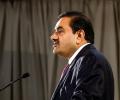
Adani Airport Holdings (AAHL) has announced it will raise 9,825 crore through a primary equity infusion from a consortium of global investors, including Alpha Wave Global, Premji Invest, Temasek, and funds managed by BlackRock, who will collectively acquire a 5.54 per cent stake.

Prime Minister Narendra Modi has announced plans to modernise India's civil defence volunteer force, stating that the existing system, designed for conventional wars, is inadequate against contemporary threats targeting critical infrastructure like refineries, banks, and data centres.

Merchants will be subject to an 18 per cent Goods and Services Tax (GST) on the Merchant Discount Rate (MDR) for UPI payments exceeding Rs 2,000, but can mitigate this burden by claiming input tax credit (ITC), according to tax experts.

The Congress party has criticised the Modi government over a notification regarding UPI transactions, alleging it paves the way for imposing fees, especially on transactions above Rs 2,000. Rahul Gandhi claimed the government is surrendering to American pressure, while Mallikarjun Kharge highlighted the potential burden on common citizens amidst inflation. The government's notification prohibits charges on UPI transactions up to Rs 2,000 but remains silent on higher amounts, sparking fears of a "Digital Payments Tax."

'Value is not where you make money in India. It never has been.' 'You have to buy momentum.' 'Momentum is in technology, and I don't see that slowing down because I believe the AI infrastructure boom is going to last for a while.'
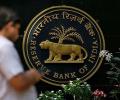
Reserve Bank of India (RBI) Deputy Governor Rohit Jain has warned that financial institutions' increasing reliance on a small number of common technology providers, including cloud and AI model providers, could create a new source of systemic risk. He highlighted 'speed, concentration and opacity' as key risks, noting that a disruption at one provider could rapidly spread across multiple institutions, amplifying existing financial risks.

The biggest challenge to widespread deployment is no longer AI. It is the financial and commerce infrastructure that was built decades ago for deterministic software and human interactions -- not autonomous AI agents.

The Indian government has notified the Legal Metrology (Indian Standard Time) Rules, 2026, establishing IST as the sole reference for all official purposes nationwide. These rules, effective in 180 days, aim to synchronise digital systems, reduce reliance on foreign time sources, and enhance coordination across critical sectors like banking, railways, and telecommunications.

The Payments Council of India has confirmed that Unified Payments Interface (UPI) services will continue to be free for consumers and small merchants, despite a recent Lok Sabha Bill. This clarification addresses concerns about potential charges, emphasising that while a sustainable financial model for UPI infrastructure is being developed, transaction charges will not be passed on to users or small businesses.

'Eastern Ladakh set the relationship back by about 10 steps. So far, especially since Galwan, we may have taken just 4 steps forward.'

Private corporations in India invested approximately 30.3 trillion in fixed assets during FY25, marking a 7 per cent increase from the previous year, according to the statistics ministry. This growth in private capital expenditure contrasts with a slowdown in government capital spending.

Axis Bank has opened 50 new branches across India, while Abakkus Mutual Fund has surpassed Rs 10,000 crore in AUM. YES Bank launched a new credit card for women, and J&K Bank partnered with HDFC Life to enhance its insurance offerings, showcasing significant growth and strategic developments in the Indian financial sector.

'Improved law and order and transparent governance have helped change UP's investment image.'

The Finance Ministry has refuted allegations that US pressure influenced the decision to levy a 0.4 per cent Merchant Discount Rate (MDR) on select UPI payments. The ministry clarified that the NPCI guidelines prioritise RuPay credit cards on UPI to promote domestic alternatives and ensure a self-sustaining revenue model for smaller domestic companies, countering claims of favouring foreign payment providers.

In recent years, China and Russia have pushed for de-dollarisation within BRICS, which India has resisted. One reason is that India does not want to hurt its relationship with the United States, and another is the fear of China controlling trade because the renminbi is considered the strongest currency in the bloc today.

The Securities and Exchange Board of India (Sebi) is reportedly 'close' to approving the National Stock Exchange's (NSE) initial public offering (IPO) draft documents, with an expected market debut by early next month. Sebi Chairman Tuhin Kanta Pandey also emphasised the regulator's focus on enhancing market resilience against evolving risks, including technology failures and the impact of artificial intelligence.

If India does get $100 billion a year in FDI, it would be a game-changer in every possible way. FPIs would come rushing back, AI or no AI, points out Debashis Basu.
Prime Minister Narendra Modi celebrated the Unified Payments Interface (UPI) completing a decade, calling it a major turning point in India's digital payment journey. Launched in 2016, UPI has become the backbone of India's digital payments ecosystem, showing exponential growth in transaction volume and value, and is a key pillar of the Digital Public Infrastructure.

The Lok Sabha has passed a Bill to amend the Payment and Settlement Systems Act, 2007, authorising the government to permit banks and service providers to levy charges on UPI and other electronic payment modes. This move aims to create a sustainable revenue model for the digital payments ecosystem, shifting from the current exemption of UPI transactions from such charges.

The CPI(M) has strongly opposed the Union government's proposal to levy charges on UPI transactions, calling it a "breach of public trust" and demanding the immediate withdrawal of the legislation. The party highlighted that the government had previously promoted UPI as a free public utility, encouraging widespread adoption, and now seeks to monetise this infrastructure. They also linked this move to a broader trend of increasing banking charges.

Chinese President Xi Jinping addressed the BRICS summit, urging the bloc to play a significant role in achieving peace and tranquillity in West Asia and the Gulf region. He highlighted BRICS' growth over two decades, its efforts in tackling global challenges, and its steadfastness in safeguarding the interests of the Global South. Xi called for opposing the Cold War mentality, strengthening multilateralism, and promoting cooperation in emerging domains like AI, as China prepares to chair the next summit.

India's cement industry is on the brink of an oversupply situation as aggressive capacity expansion by major players is set to outpace demand growth over the next two financial years, potentially leading to pricing pressures and moderated utilisation rates.
Unified Payments Interface (UPI) transactions in India reached Rs 29.8 lakh crore in August, approaching record levels. Volume also hit a new high of 24.51 billion transactions, driven by festive activities like Raksha Bandhan. The digital payment system continues its rapid growth, expanding its global presence to 11 countries, with further growth anticipated during the upcoming festive season and new use cases like credit on UPI.

India said the Hague-based Court of Arbitration has no jurisdiction over its sovereign decisions on the Indus Waters Treaty.
Finance Minister Nirmala Sitharaman clarified that the Merchant Discount Rate (MDR) on digital transactions applies to merchants, not customers, and aims to support banks and fintech in infrastructure investment. She countered Congress leader Jairam Ramesh's claims, stating that a committee will decide on MDR only after Parliament passes the Taxation and Other Laws (Amendment) Bill, 2026, a process currently stalled by parliamentary disruptions.

Essel Group founder Subhash Chandra has called for an independent audit to examine the group's borrowings, defaults, and repayments, stating that approximately 43,000 crore of its 45,000 crore total debt has been repaid.
